
How Postpartum Doulas Support Mental Health
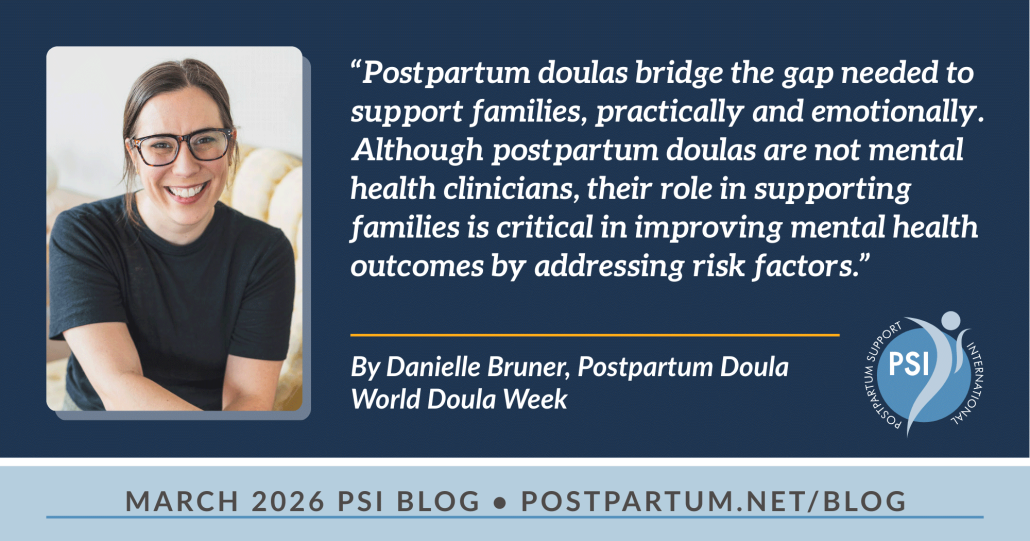
By Danielle Bruner, Postpartum Doula
World Doula Week
The postpartum period is an incredibly vulnerable time in new parents’ lives–physically, mentally, and emotionally. While the focus is often on the new baby, parents’ mental health is overlooked. The statistics don’t lie: one in five women suffers from a perinatal mental health disorder (PMHDs), and this is merely the women who choose to report. Additionally, 1 in 10 men suffer from PMHD.
Postpartum doulas bridge the gap needed to support families, practically and emotionally. Although postpartum doulas are not mental health clinicians, their role in supporting families is critical in improving mental health outcomes by addressing risk factors. Three of the most impactful include sleep, nutrition, and combating loneliness.
Protecting Rest with Disrupted Sleep
Everyone who has had a baby knows the sheer exhaustion of waking up every 2-3 hours to feed in the middle of the night and how difficult it is to nap during the day. Postpartum doulas help protect the rest of the parents by providing night or daytime support.
Doulas can work with families to create realistic sleep plans unique to each family’s needs. I often begin by discussing this with each family when we meet during pregnancy and again after the baby’s arrival. My role is to help parents find windows to rest, including taking over baby care, identifying ways for parents to switch off care, and teaching parents to read their baby’s cues and soothing techniques.
Additionally, doulas can take over light household tasks, laundry, and changing and soothing the baby between feeds. This frees up time for parents to rest and bond with their baby, rather than being consumed by daily household tasks.
Postpartum doulas often work nights for families. Many of my clients share with me the dread that approaches as the sun sets and the intrusive thoughts begin. Postpartum doulas provide a calm, knowledgeable presence that allows parents to relax and reduce their anxiety to get a good night’s rest.
Nourishment for the Body to Support the Mind
Adequate nutrition is vital for recovery after birth. After pregnancy, many birthing persons are already nutritionally depleted from pregnancy, and caloric needs are higher for those who are breastfeeding. Additionally, finding the time to make and sit down and eat a nutritious meal with a newborn is often challenging.
Many postpartum doulas take additional training in postpartum nutrition. This training is critical to fill in nutritional gaps and support the body as the digestive system returns to normal after birth. After birth, many nutrients are deficient, including omega-3s [2] and vitamin D [1], which can be linked to depression and anxiety.
Postpartum doulas provide practical support to meet the family’s needs. This may include assisting with meal planning and grocery shopping, preparing nourishing meals, or ensuring snacks and hydration are readily available. Doulas tailor their support to families’ dietary restrictions and cultural needs as well.
In addition, doulas can provide emotional support in nutrition. In a culture where “bouncing back” is the norm, doulas can provide education and support to remind our clients that proper nourishment and rest are critical to their healing. By reducing barriers to proper nutrition, doulas can support physical recovery, improve energy levels, and indirectly impact mental health and mood shifts.
Reducing Isolation with Support and Community
Many families struggle with isolation and loneliness after having a baby, especially those without family or friends nearby. Even those who have a strong community often find that after the initial rush of visitors, the support drops off and check-ins are few and far between.
Doulas provide a consistent presence in families’ lives. Many clients will elect for packages that give anywhere from 4 to 6 weeks of care. My clients often tell me how important it is to have someone who listens without judgment and provides emotional support that many spouses, family, or friends cannot. This support reduces the isolation and shame often felt by parents.
Doulas can often be a first line of defense in spotting the signs of a perinatal mental health disorder and encourage parents to seek support from their doctor, counselor, and family. Additionally, doulas have connections in the local community to provide referrals to other perinatal providers, like therapists and lactation consultants, as well as community groups to help families get plugged into their local community or online support groups, like Postpartum Support International.
For many parents, the consistent support and presence of a doula reassures them that their needs are being seen, heard, and met, protecting their mental health in such a vulnerable time of transition.
Postpartum Doulas: A Valuable Member of the Perinatal Support System
Sleep, nutrition, and connection are essential for new parents for their recovery and well-being. By providing this support early for families, doulas can work toward preventing adverse outcomes in mental health.
While doulas do not diagnose or treat perinatal mental health disorders, the support they provide complements clinical care. Having relationships with local therapists is key to helping families find this practical support in their community.
Integrating postpartum doula care into the broader maternal mental health system offers a more holistic approach–addressing both the practical and emotional needs of new parents. I hope that one day, postpartum doula work will be covered by insurance because it is recognized as preventative care for parents’ mental health.
As postpartum mental health awareness continues to grow, integrating postpartum doula support is an important step in ensuring that no parent has to go through their struggles alone.
References
[1] Gur EB, Gokduman A, Turan GA, Tatar S, Hepyilmaz I, Zengin EB, Eskicioglu F, Guclu S. Mid-pregnancy vitamin D levels and postpartum depression. Eur J Obstet Gynecol Reprod Biol. 2014 Aug;179:110-6. doi: 10.1016/j.ejogrb.2014.05.017. Epub 2014 Jun 2. PMID: 24965990.
[2] Hsu MC, Tung CY, Chen HE. Omega-3 polyunsaturated fatty acid supplementation in prevention and treatment of maternal depression: Putative mechanism and recommendation. J Affect Disord. 2018;238:47-61.
About the Author

Danielle Bruner
Danielle Bruner is the founder of A Bridge to Motherhood and host of the A Bridge to Motherhood Podcast. She helps Type-A, perfectionist moms turn their love of structure into a powerful asset in postpartum. After experiencing postpartum anxiety and depression with her first baby—and a truly wonderful, supported postpartum the second time—Danielle became passionate about helping moms feel prepared, empowered, and deeply seen in life after birth by becoming a postpartum doula.
Her signature Postpartum on Purpose approach offers a step-by-step framework that supports the whole mom—physically, mentally, emotionally, relationally, and spiritually—so she can confidently prioritize her well-being while navigating new motherhood. Through her A Bridge to Motherhood Community, practical tools, and real-talk encouragement, Danielle is on a mission to make sure no mom has to figure it out alone.
When she’s not supporting moms, you can find her chasing her two little ones, sipping a hot cup of tea, or planning the next mom-friendly playdate. Follow Danielle @abridgetomotherhood on Facebook, Instagram, and TikTok.
Explore these PSI Resources:
PSI Provider Directory
Get Help
More Information on Doula Care
Subscribe to the PSI Blog

Connect by PSI
Download our free app “Connect by PSI” in your app store to access PSI support, resources, and information in the palm of your hand.


