Shanita’s Story: The way her pregnancy and postpartum period led to a “full circle” PSI experience.
![From Healing to Helping “[PSI’s] networking, the meet-ups, and the educational offerings lifted me up. They connected me to a community of survivors, providers of color, and advocates who shared my belief that this could happen to anyone, and we all deserve to be supported.”—Shanita](https://postpartum.net/wp-content/uploads/2026/01/Impact-Report-—-It-all-started-with-a-wish-Shanita-Story-1030x541.png)
By Shanita Alvarez-Crawley, LCSW, PMH-C, Alliance for People of Color Director
At PSI, we understand that storytelling has the power to save lives, and we are honored to provide a space for survivors to share their stories. This article is part of a subsection of the PSI blog dedicated to survivor stories. Please note that this story has not been edited, and caution is advised as distressing themes related to perinatal mental health may be present. If there are specific trigger warnings for an article, they will be listed below. Links to resources can be found at the bottom of this page.
Trigger warning: intrusive thoughts involving fear of dying, details of birth trauma
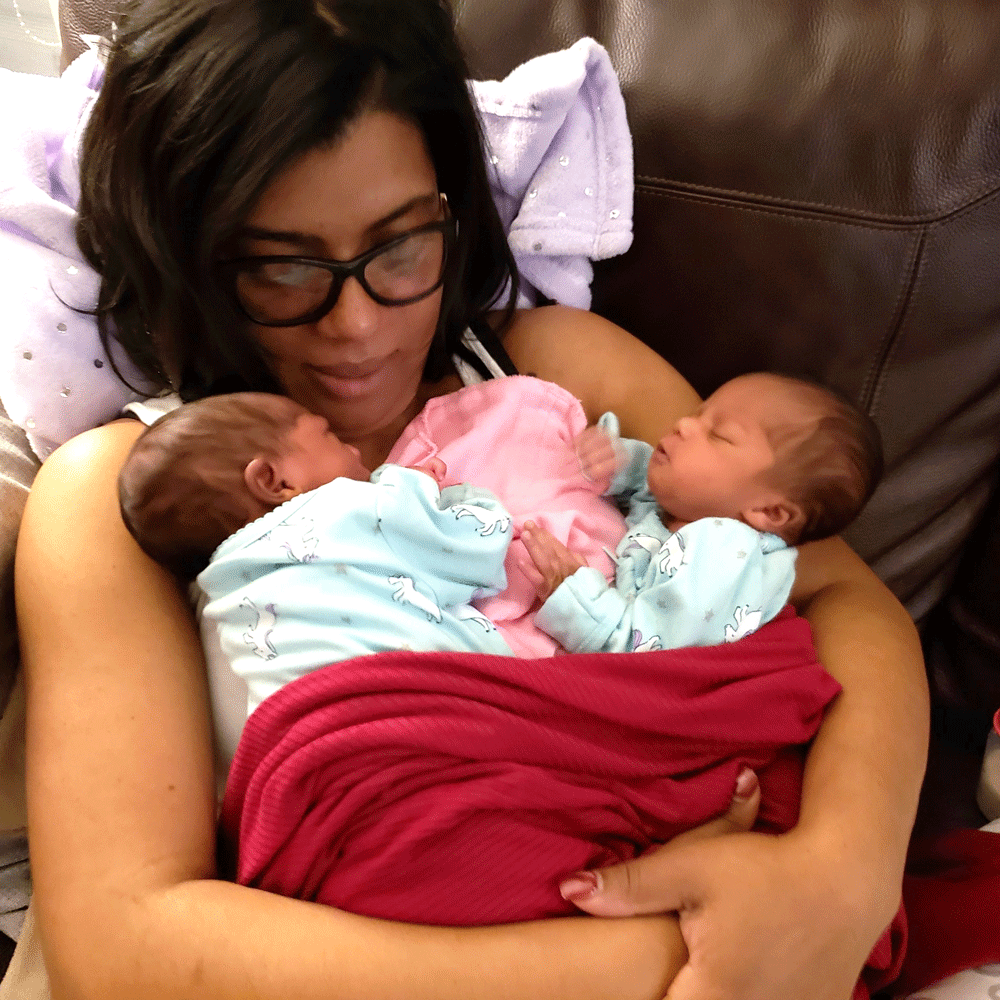
In 2019, I welcomed beautiful twin girls to the world. I was five months away from my 40th birthday when they arrived at 36 weeks and three days gestation. My pregnancy was turbulent, with every feeling on the spectrum. An “advanced maternal age” twin pregnancy came with significant risks, fears, and worries. I was blessed to have an obstetric provider who knew my family and me and did their best to prepare me for all that was unpredictable in this type of situation. I knew that I would have constant medical surveillance for this pregnancy and was aware of all the things that were being monitored to increase the chances that the babies and I made it through the pregnancy. On the outside, I was excited and optimistic. Everyone rallied around and shared how I had been “double-blessed” with such a journey.
Inside, though, I was terrified day in and day out.
Thoughts, Fears, and Worries
My commute to work was my time to cry and release some of my fear and intrusive thoughts. Would I survive? Would the babies be born early and have an extended NICU stay? Would they come into the world already fighting for life? Would I be good enough? Could I hold both at the same time? Could I love them both equally, and would I have enough love to give them and the rest of the family? For 36 weeks and three days, these thoughts, fears, and worries hijacked every part of my body and presence, and I truly struggled to embrace optimism and “enjoy” the pregnancy as one would fantasize about.
Pregnancy Through Delivery Day
During my pregnancy, I was a trained social worker, so I understood coping methods and skills for dealing with anxiety, fears, sadness, worry, and intrusive thinking. I did my best each day to manage those thoughts and emotions and take control of the parts that I felt I had control over. Diet, walking, keeping appointments, staying healthy. I knew that my birth plan had to be mindful of the fact that Baby B was breech and vaginal birth could possibly not be an option, so I planned for a c-section in the event she didn’t turn in time. I even picked my delivery day, and that made me feel like I had some control.
But on delivery day, I woke up to pains, and shortly after, my water broke. I went into full panic mode because I was home alone. I remember calling my husband and mother at 8:32 AM, frantically telling them that the plans had changed, my water was broken, and the scheduled birth time would be moved up. From there, I was in such a panic with these thoughts that I’d deliver on the way to the hospital, and Baby B would get hurt. The next thing I remember is welcoming my girls about two hours later.
The Early Days of Postpartum
Nothing prepared me for the six weeks or so of my postpartum journey. I learned that at the end of my pregnancy, I had developed anemia; my blood count was low, and I lost a lot at delivery. I had also developed preeclampsia, and my blood pressure was uncontrolled. All these terms and complications were foreign to me, and I figured they had mixed the charts until I tried to move around, collapsed, and required multiple blood transfusions. I remember vividly believing that I was going to die and leave the girls with no mother as I watched them go to the nursery while I got the transfusions.
On discharge day, I learned that my girls were free to go home but I needed to stay another day or so for additional blood transfusions, monitoring, and to get my blood pressure controlled. I couldn’t keep the girls there with me while I recovered, so I did what most moms do: I signed out AMA and insisted on going wherever they go. I remember being told that if I felt the way I felt the night previously when I passed out, I needed to come back to the hospital immediately. I nodded, took my things, and went home.
Anxiety Takes Over
I felt that way for a few weeks after going home. Like I would die at any minute. If I fell asleep, I’d jump up in a panic, fearful that I wouldn’t be able to wake up or that something would happen to the girls while I was sleeping. I couldn’t remember much of the delivery, and felt terrible flashbacks trying to look at delivery photos. What I saw in those photos confirmed for me that I was close to death. I was terrified. I experienced flashbacks, anxiety, and increased feelings of grief and loss.
I never told my family that I felt ill and should go back to the hospital because I was trying to be strong and hold it together for everyone. I also felt guilty, because after all, we had been blessed… no NICU, no defects, the girls were good, and I should be happy.
Looking back on that experience, I always imagine that if I didn’t have the therapeutic background and coping skills I possessed, it would have been ten times worse for me. I feel immense empathy for all the birthing individuals who did not have such a strong foundation for coping with such challenging circumstances. It was that realization that guided the next chapter in my career.
Finding Purpose
I started to learn more about what I had survived and started thinking: was it possible to have such negative feelings about what society calls one of the happiest times in our lives? Should things like PTSD, anxiety, and worry be a diagnosis that we mix with pregnancy and postpartum? And as I learned more about maternal and infant mortality and increased risk for birthing persons of color, I was compelled to do more. These were my people, and they needed support.
I quickly realized that I had actually been blessed, as I had access to resources, a supportive community, education, and meaningful relationships. I was able to call or see my OB doctor daily as I struggled with the fears of dying, and they allowed me to come in with the babies as much as I needed to until I got better. My blood pressure did not start to stabilize until the feelings of imminent death or harm for the babies and me calmed down.
I am used to being the strong one and the “fixer,” so I felt that I had no one to turn to and had to work through all of those feelings in isolation. It was during that silent journey of suffering, surviving, learning, and understanding that a new purpose pulled me in its direction.
In 2021, I took a leap of faith and joined an ambitious hospital-based program building solutions to combat the rising numbers of maternal mortality and morbidity in the community. I quickly identified that many of the frameworks focused more on the medical prevention and medical needs model and lacked frameworks for incorporating mental health screening and support to develop a comprehensive treatment team during the perinatal period. I championed the inclusion of this framework and created systems and infrastructure to support medical and mental health throughout the journey.
Finding PSI’s Resources
As I learned more about perinatal mental health and cultural considerations for communities of color, I found Postpartum Support International and felt so energized. I realized that I wasn’t just imagining the importance of the mental health considerations during the perinatal period. As I grew more in the maternal health equity space, I quickly got involved with the Alliance for People of Color and the NJ Chapter Board.
I knew that representation mattered, and I recognized that there are many more women and birthing people of color in the world who may have experienced something like what I did, and being the “stronger one” kept them in isolation.
Building Community and Connection
When I worked in systems or spaces where diversity was lacking, this community offered support, validation, solutions, and rallied around me as I did the work. PSI and the Alliance encouraged me to be vulnerable and share my story, passion, and energy with others. PSI supported me with getting my PMH-C and becoming a local, state, and national champion for perinatal mental health for communities of color. Proudly, I participated in every training, program, meet-up, and offering that PSI provided so that I could learn more and do more.
From Healing to Helping: Coming Full Circle
In March 2025, I got the greatest honor to join PSI full-time as the Alliance Assistant Director, where I joined the community that supported me during my journey as part of the team. In July, I moved into the Director role and am honored and blessed to continue to build the Alliance community to be well-equipped to provide and support people who look like me to be able to survive the journey and be empowered to use their experience to help others.

It all started with a wish.
This story is part of PSI’s 2025 Impact Report. Learn more about the impact of our work and the wishes we have left to fulfill.
Explore More PSI Resources:
Get Help
Postpartum Planning Class
Subscribe to the PSI Blog

Connect by PSI
Download our free app “Connect by PSI” in your app store to access PSI support, resources, and information in the palm of your hand.