The Importance of Body Literacy in the Postpartum Period
By Giana Vasconcellos, MPH, CCE, CD
We know the postpartum period as a season of adjustment to a new way of life, new rhythms, layers of new identities surfacing, and fresh responsibilities multiplying by the hour. Yet for many of us, it is also a time of physical and emotional change that can feel out-of-body, confusing, and isolating. In the midst of caring for a newborn, women are often expected to, as I like to call it, “get back to it.” Get back to work, get back to your pre-baby life, get back to “normal,” when the reality is that life has a new normal, and even that normal ebbs and flows with change. While none of it feels predictable, we are rarely educated on our pre-pregnancy biology, let alone postpartum biology, and we are expected to intuitively know what is normal for our recovering body. This expectation overlooks a critical support and educational need: body literacy.
Body Literacy
Body literacy is the ability to understand, interpret, and respond to the body’s signals with confidence and clarity. It is a foundational yet under-utilized component of women’s health, and, in particular, postpartum health and emotional well-being.
Body literacy goes beyond anatomy lectures or an oversimplified symptom checklist. It is the skill of noticing bodily changes, digging into the root cause of the changes, understanding what they may indicate, and feeling empowered to seek support or care when something doesn’t feel right. Essentially, we understand that the body tells a story every day, and when we slow down long enough to notice, we can use the tools we’ve been born with to peel back the layers of literacy. In the postpartum period, this includes awareness of:
- Hormonal shifts and mood changes
- Physical recovery after birth (vaginal or cesarean)
- Sleep deprivation and its impact on mental health
- Lactation, weaning, and body changes
- Cycle awareness, when and if ovulation has occurred, patterns of fertility and infertility
- Pelvic floor health, bleeding, pain, and fatigue patterns
Body Literacy and Postpartum Symptoms
Research consistently shows that postpartum recovery is not linear, so why is our maternity care system still practicing in a linear format with postpartum patients? Hormonal fluctuations, particularly drastic drops in estrogen and progesterone, occur within days after birth and are connected to mood vulnerability. Sleep deprivation and physical healing can dysregulate the nervous system. Without a framework to identify these changes, many women internalize this kind of stress or body irregularities as personal failure rather than a physiological and psychological response to sudden change. We already have the tools to implement body literacy; we just need to learn how to use them.
Body literacy helps shift the focus of postpartum experiences from “What’s wrong with me?” to “What story is my body telling me, and what tools do I have to support it, or where can I go to get what I need?”
Perinatal mood and anxiety disorders (PMADs) affect approximately 1 in 5 mothers. Early identification and intervention are key protective factors, yet many delay seeking help because they are unsure whether their symptoms are “normal” postpartum adjustments or something more.
This is where body and emotional literacy can have a major impact. When women are taught to recognize signs and patterns in fertility and emotional fluctuations, such as persistent anxiety, intrusive thoughts, emotional numbness, sleep disturbances unrelated to infant care, or a sense of disconnection from their body or baby, they are more likely to connect a root cause. Ultimately, when they can identify why, they can feel confident in articulating their symptoms if/when they need to escalate care. Studies suggest that psychoeducation – clear, compassionate education about postpartum physical and emotional changes – can reduce stigma and increase help-seeking behaviors. Self-awareness, body literacy, and emotional literacy can be life-changing.
On the opposite end, when symptoms are ignored, dismissed, or minimized by the self or others, distress intensifies.
Finding the Balance within Body Literacy
Body literacy is the beginning of taking charge of one’s health. Pregnancy and birth can profoundly alter a woman’s relationship with her body. Depending on the setting and treatment, that level of shift can create a disconnection between her and her body. Experiences with medical interventions, unexpected outcomes, or trauma can deepen that wound of disconnection. Body literacy offers a pathway back to trust and confidence.
A balance between awareness and obsession is what is needed to encourage curiosity:
- What feels different today?
- What feels supportive or depleting?
- What do I notice about my cycle?
- What does my body need more of right now? Rest, nourishment, reassurance, or professional care?
- How does this food make me feel physically?
The key here is to be observant of cause and effect on the body, identify the need, and be unapologetic for filling that need.
Practices that support body literacy postpartum include:
- Cycle tracking using a simple fertility awareness method
- Guided check-ins with healthcare providers that focus on individualized emotional and physical recovery
- Trauma-informed postpartum care
- Education on menstrual cycle fluctuations, what typical healing timelines look like, and where variation is normal
- Language that encourages rest, slowness, and recovery
Body Literacy Involves the Entire Support Team
While body literacy is an empowering individual experience, it still remains a collective responsibility. Partners, providers, families, and communities all play a role in reinforcing that body literacy is a form of empowerment, emphasizing that postpartum bodies deserve intuitive attention, patience, and care.
Organizations like Postpartum Support International are essential in bridging the gap between education and support, reminding women that their experiences are valid, they have innate tools to support themselves, and that help is available to fill in when they cannot. Integrating body literacy into postpartum conversations, alongside mental health screening and social support, creates a more holistic and compassionate model of care.
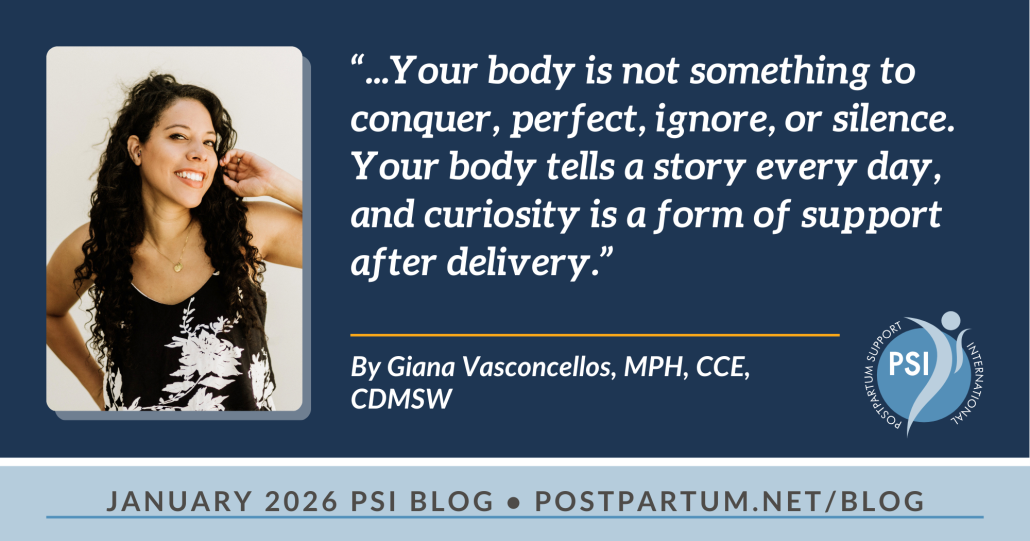
If you are postpartum and reading this, remember that your body is not something to conquer, perfect, ignore, or silence. Your body tells a story every day, and curiosity is a form of support after delivery. Learning body literacy is most certainly not a destination, but a journey with different experiences along the way. While we value individualized care, body literacy can be incredibly powerful when the maternal health community is in support.
Body literacy is not about having all the answers; it’s about knowing when to ask questions, address needs, and knowing when to escalate care. There’s power in knowing our bodies that can carry us through all experiences, and the postpartum season gives us the chance to tune in while focusing on recovery and healing. At the end of the day, a healthy postpartum makes for a healthy experience into parenthood and beyond.
About the Author

Giana Vasconcellos, MPH, CCE, CD
Giana Vasconcellos, MPH, CCE, CD, is a writer, educator, and public health professional specializing in women’s and maternal health, fertility awareness, and body literacy. With a Master’s degree in Public Health and certifications in childbirth and fertility education and integrative nutrition, she blends research, personal experience, and deep curiosity to create honest, empowering content for women to thrive in all aspects of life. Her work has appeared in publications like Business Insider, and she writes a popular Substack newsletter focused on the intersections of motherhood, curiosity, wellness, and self-awareness.
Find Giana on Instagram: @simplygiananataliav
Explore These PSI Resources:
Information on Perinatal Mental Health
Get Help
Provider Directory
Subscribe to the PSI Blog