Reflections on Postpartum Mental Health
By Kelsey Kuramoto
At PSI, we understand that storytelling has the power to save lives, and we are honored to provide a space for survivors to share their stories. This article is part of a subsection of the PSI blog dedicated to survivor stories. Please note that this story has not been edited, and caution is advised as distressing themes related to perinatal mental health may be present. If there are specific trigger warnings for an article, they will be listed below. Links to resources can be found at the bottom of this page.
Trigger warning: intrusive thoughts
Looking Back at Having a Baby in the Pandemic
I have been feeling so many things during this Lindsay Clancy trial. My algorithm is so synced up with true crime that I’ve actually known about this story since it first happened in 2023. Lindsay is a woman whom I see myself in. Lindsay had three children, with her second born in September of 2019. Only six months later, the world would be turned upside-down by the COVID-19 pandemic. Lindsay’s second would only have been six months old, and her first just two-and-a-half. I can only imagine how overwhelmed she must have felt.
I had my son in March 2020, and not long after, I began to experience pretty drastic postpartum anxiety and depression. My son would not latch when being breastfed; he would hardly latch to a bottle. For the first four months of my son’s life, if his eyes were open, he was crying… to be frank, he would be wailing. A cry that still haunts my thoughts. He was “colicky.” I don’t have enough fingers or toes to count the number of times I heard from professionals that my baby is “colicky” and that “he will grow out of it.” My son was, by all means, “meeting the standard growth chart,” so my worries of how he was latching onto either me or a bottle were scoffed at. “Look at his chart! He has gained a pound! He’s fine; see you in a month.” He ended up needing a tongue tie and a lip tie reversal procedure. Even when he was taking a bottle, he still wasn’t getting enough food because his little mouth and tongue were working double time to get the milk.
The Mental Load of Exclusively Pumping and Feeding Issues
I was never told to pump my breastmilk, but I would be lying if I said that the weight of the “breast is best” ideology didn’t lie heavily on my chest, pun not intended. I pumped for 14 months straight, and I don’t know if I would ever put myself through that again. The mental load of being connected to a machine every couple of hours still gives me shivers when I think about it. How did I discover that my son was tongue-tied and lip-tied? Oh, during one of those middle-of-the-night pumps at 3 AM, I went down a rabbit hole as to why my child does not seem satisfied or nourished or happy or calm. The months leading up to this discovery, I wailed just as much as he did.
Let me be clear, I do not think breastfeeding is the only way to bond with your child—but it was how I wanted to bond with my child. So when that wasn’t working, and I was unaware as to why he always seemed so uncomfortable, and he refused to be worn, and he could not be soothed, my postpartum anxiety and depression took off, like a thief in the night. Stealing my peace, stealing my joy, stealing the bonding moments that I so longed for. I remember my husband walking into our bedroom and having to remove my baby from my arms because I was trying every which way to get him to settle and get him fed. I was trying so hard to get him to latch because I needed to feel like I was doing whatever I could. “I am his MOM! I am supposed to know what to do! He is supposed to find comfort in me!” That was a sentence that escaped my lips more often than I like to remember.
Intrusive Thoughts Enter the Scene
Then came the intense worry. “What if I drop him off a mountaintop?” I am not kidding; that was my number one intrusive thought. It sounds so absurd to say out loud now, six years after my son was born. A mountaintop? I was nowhere near a mountaintop; however, the thought of dropping him from this haunting, imaginary place plagued my thoughts. It terrified me that I could even think of such a thing. When I closed my eyes or attempted to quiet my mind, why did I agonize over this gut-wrenching fear of dropping him off a mountain? This is what they call postpartum intrusive thoughts. As a new mom, as a woman in this world, I felt so much shame and horror that such awful thoughts would force their way into my mind—what a horrible mother I must be. NO. Postpartum intrusive thoughts go hand in hand with postpartum mental health disorders. I lacked the tools, and putting my fears and woes into words felt like trying to speak a foreign language.
When Addiction and Mental Health Struggles Intersect
I ended up giving up four and a half years of sobriety a year into my postpartum journey. I am not saying it was anyone else’s fault but my own; however, as someone who has struggled with addiction and alcoholism, I know all too well the lure to self-medicate to turn off the noise. And here is where thoughts fall to Hayden Panettiere. There is something especially heartbreaking about a woman who speaks openly about her own postpartum depression and her struggles with addiction after becoming a mother, only to get shunned. She was brave enough to say the quiet part out loud. Hayden told the world that motherhood did not feel the way she thought it should. She admitted to struggling when everyone expected her to be happy; a new mother is supposed to be happy. Her story feels especially heavy on my heart right now because I understand how postpartum mental struggles and addiction can become so painfully intertwined.
Recent Reflections on Postpartum Mental Health
Lindsay Clancy asked for help. That fact of this case is difficult for me to shake from my brain. I remember needing help and having the intention of being transparent. I remember not having the language for what was happening inside my own head and desperately seeking someone to decode my thoughts. I remember believing that the thoughts themselves meant something terrible about me.
Postpartum mental health matters. Mothers asking for help matters. The responsibility of recognizing when someone is slipping further and further away from themselves should not be on the shoulders of the woman or her loved ones, and that matters. I believe to my core that mothers deserve to be heard and helped before things ever have a chance to reach a breaking point.
I was fortunate enough to come out the other side. In the years since, I have found my way back to sobriety, gone back to school, and am now beginning at CSUN studying Communication Disorders. I have gotten to watch my son grow from that inconsolable baby into the little person he is today. I get to keep becoming his mother while also finding pieces of myself again.
I got to see what came next. Lindsay’s three children never did.
Lindsay Clancy and those babies deserved so much more.
Mothers everywhere deserve more. We deserve to be heard before it becomes a crisis. We deserve to be believed before something goes wrong. We deserve support that goes beyond asking if we’re okay and accepting “I’m fine” as an answer. We deserve a world that takes the mental health of mothers as seriously as it takes the health of the babies in our arms.
About the Author
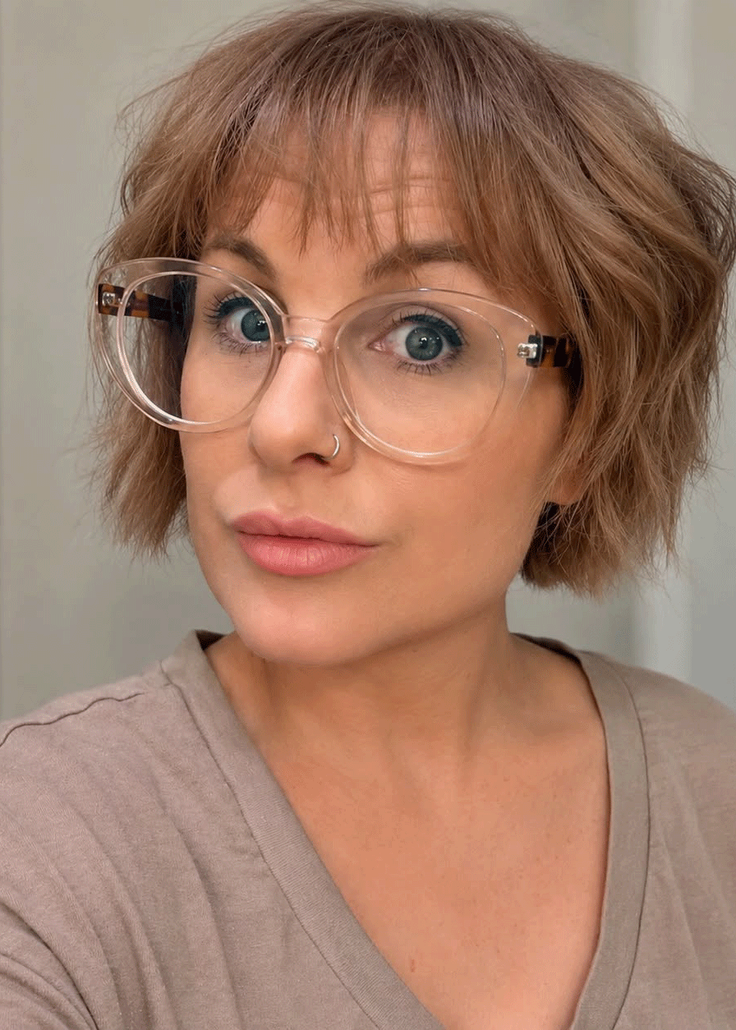
Kelsey Kuramoto
Kelsey is a mom, writer, and returning college student living in Southern California. She is currently studying Communication Disorders and Sciences at California State University, Northridge, on her path to becoming a speech-language pathologist. Drawing from her own experiences with motherhood, postpartum mental health, and recovery, Kelsey is passionate about honest conversations surrounding the parts of life that are often difficult to talk about. Kelsey is currently writing a children’s book, Will You Make Me Happy?, offering a gentle, child-centered look at postpartum mental health.
The views and opinions expressed in this blog are those of the author and do not necessarily reflect the official policy, position, or views of PSI, its leadership, employees, affiliates, or partners. Any content provided by the author is for informational purposes only and should not be construed as representing PSI’s official stance on any matter.
Explore these PSI Resources:
Perinatal Mental Health Training for Professionals
Connect with Support
Learn More About Perinatal Mental Health Disorders
Subscribe to the PSI Blog

Connect by PSI
Download our free app “Connect by PSI” in your app store to access PSI support, resources, and information in the palm of your hand.